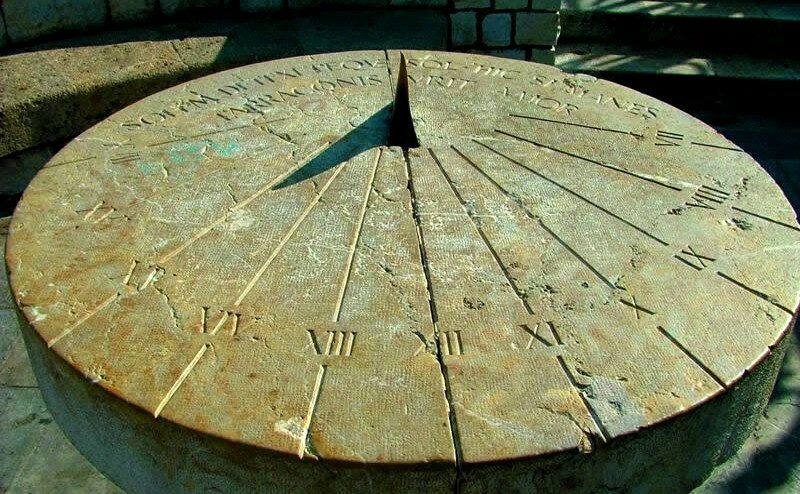
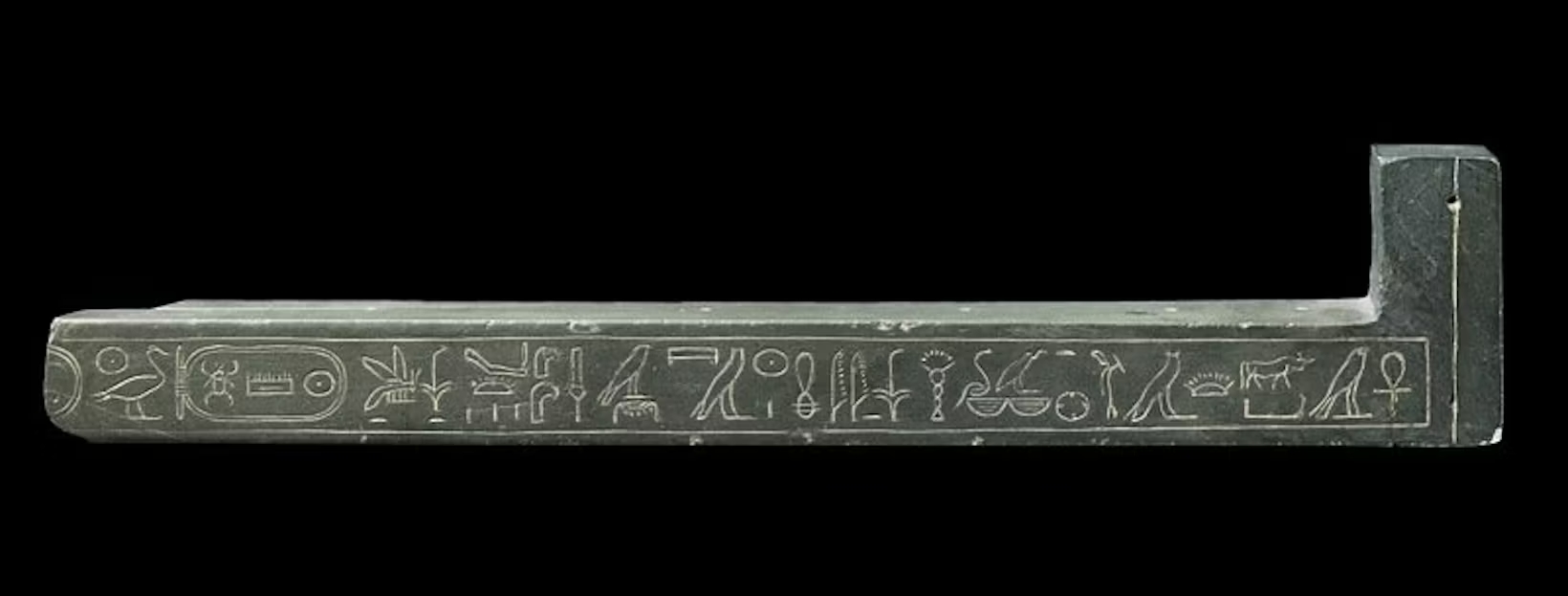
Early gnomons are dated to around 3500 BCE, and the practice of telling time by shadow and dividing the day into hours is associated above all with ancient Egypt and Mesopotamia. Among the best-known examples are an L-shaped bar of green schist from the time of Pharaoh Thutmose III, 16th century BCE, and a similar object from the Fayum, dated 1000–600 BCE, both preserved in the Egyptian Museum and Papyrus Collection in Berlin.
Such instruments, however, were useful only in bright sunlight. To overcome that limitation, humanity devised the clepsydra, or water clock, which could measure time in the dark, including indoors. Itsconstruction was simple: a stone, ceramic, or metal vessel was filled with water, which then slowly drained away, and as the level fell, markings on the inner wall indicated the hour. The earliest examples also appeared in ancient Egypt. Among the oldest surviving specimens is the Karnak clepsydra, dated to the reign of Pharaoh Amenhotep III, that is, the 14th century BCE.
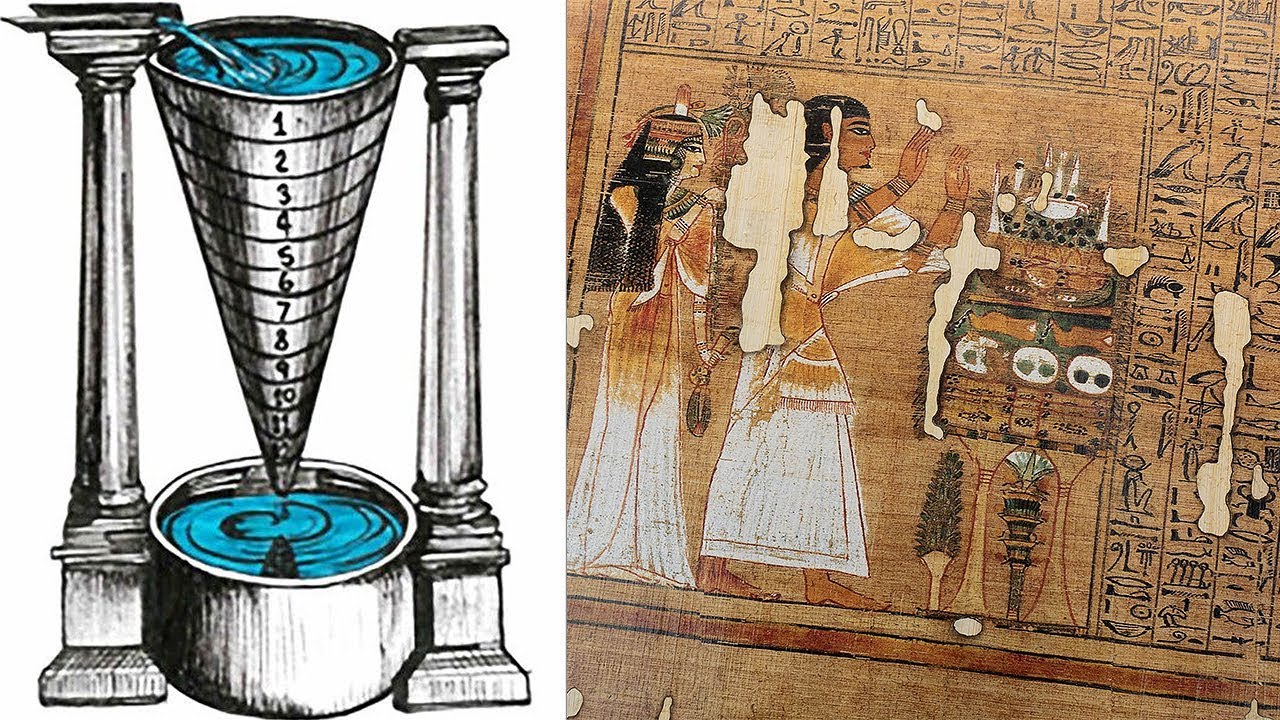
In more advanced versions, which developed during the classical period, the float came into use. Late clepsydras did more than measure intervals of time. They could also produce sound signals, with the flow of water setting bells, gongs, and moving figures in motion. For many centuries, water clocks remained the main alternative to gnomons wherever the latter were of no use. Other ways of measuring time existed alongside them, including fire clocks and hourglasses, yet the clepsydra became the most sophisticated strand of early timekeeping.

The next decisive step was linked not to the further refinement of water-driven devices, but to a shift toward a different technical concept. By the end of the 13th century, the first documented references to tower clocks appear in England. The examples most often cited are Dunstable, St Paul’s Cathedral in London, Westminster, and Canterbury. These clocks struck the hours on a bell, but they still had neither dials nor hands. The regularity of their motion was controlled by a verge escapement with a foliot, a simple regulating device in the form of a bar with weights at either end, whose position determined the speed of the mechanism.
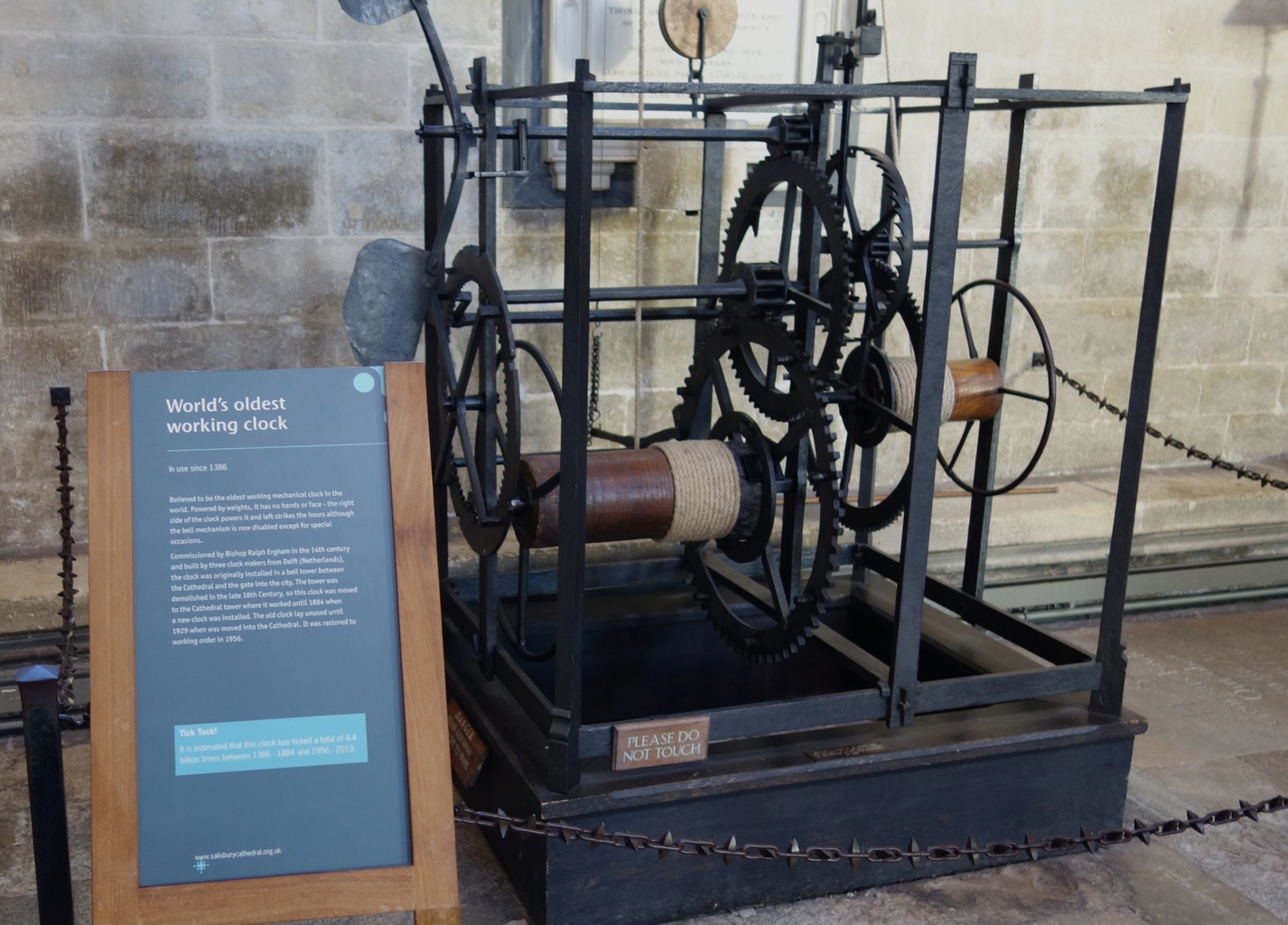
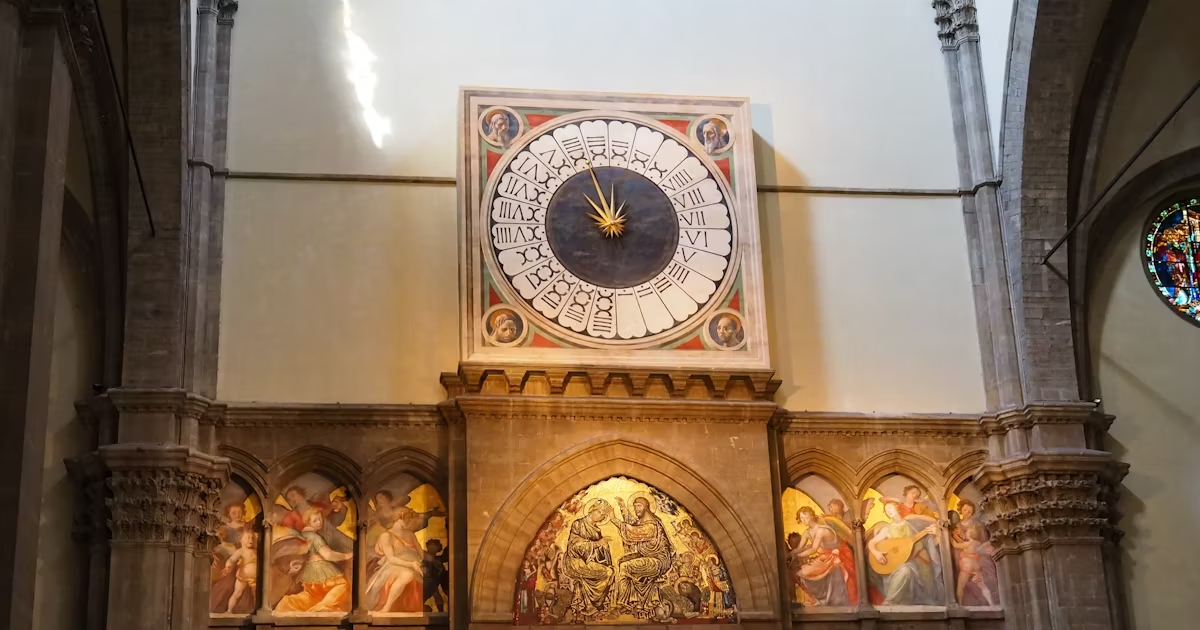
Once tower clocks began not only to strike the hour but also to indicate it visually, the most natural solution was a single hand, the hour hand. For early mechanisms, that was enough: because of their construction, they were still far too imprecise for anything more. Many of the best-known clocks of this kind are associated with Italy in the 14th and 15th centuries. In this context, Padua is usually mentioned first, where Jacopo Dondi created his famous clock in 1344, followed by Florence, where a civic mechanism with a single hand appeared on the tower of the Palazzo Vecchio in 1353, and the clock in Florence Cathedral, Santa Maria del Fiore, whose 24-hour dial was painted by Paolo Uccello in 1443
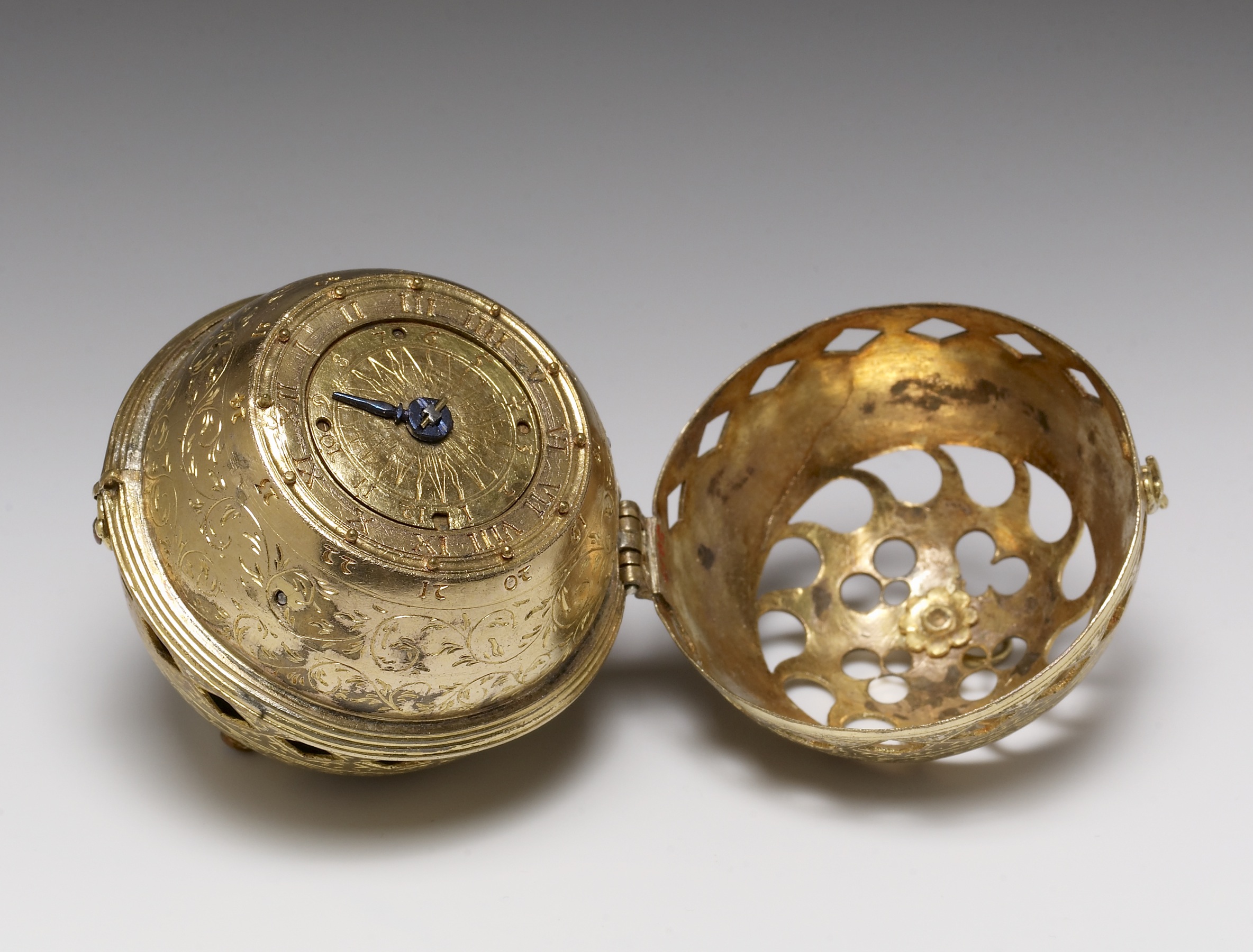
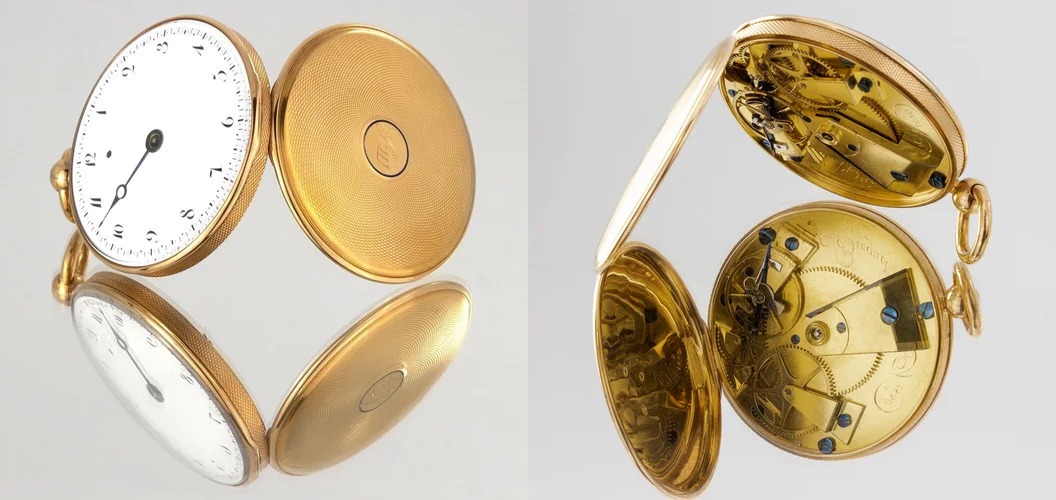
With the arrival of the Renaissance, single-hand portable watches with spring-driven movements began to gain popularity in Nuremberg. They are usually associated with the name of Peter Henlein and dated to the early 16th century. Abraham-Louis Breguet also played a major role in the spread of the single-hand watch, offering his clients a model known as the Souscription. Although he had already made two-hand watches by that point, it was the subscription watch that achieved remarkable success.
Its appeal lay in a fortunate combination of qualities: a large, easy-to-read dial, a relatively simple layout, a reliable movement, and an accessible price. These watches were sold against an advance payment of one quarter of the full cost, and that system opened the way for Breguet to reach a much broader audience. It is hardly surprising that this line remains part of the House’s rich heritage well into the 21st century. Single- hand watches did not disappear even after the minute hand secured its place in the industry.
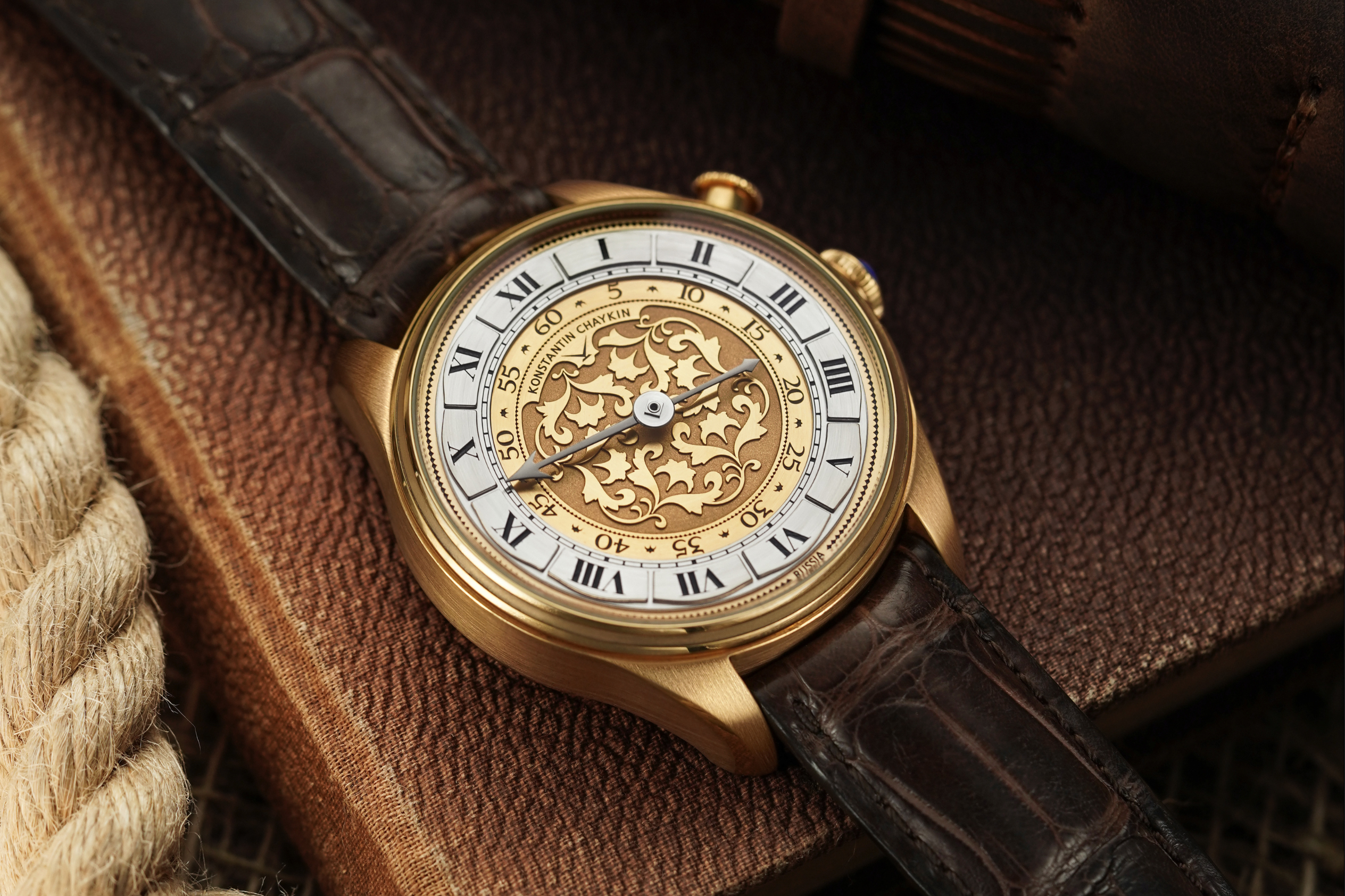
Over time, they settled into a narrower, more discerning niche, especially valued by collectors and connoisseurs of horology. Today, that tradition continues to live on and to be reinterpreted. One of its most striking modern expressions is Konstantin Chaykin’s Genius Temporis, introduced in 2014 Outwardly, it is a deliberately classical watch, one in which the Renaissance restraint of the dial is paired with richly finished casework and movement decoration. Inside is the in-house K.01-5 calibre, a hand-wound movement with 29 jewels, a balance frequency of 21,600 vibrations per hour, and a 48-hour power reserve.
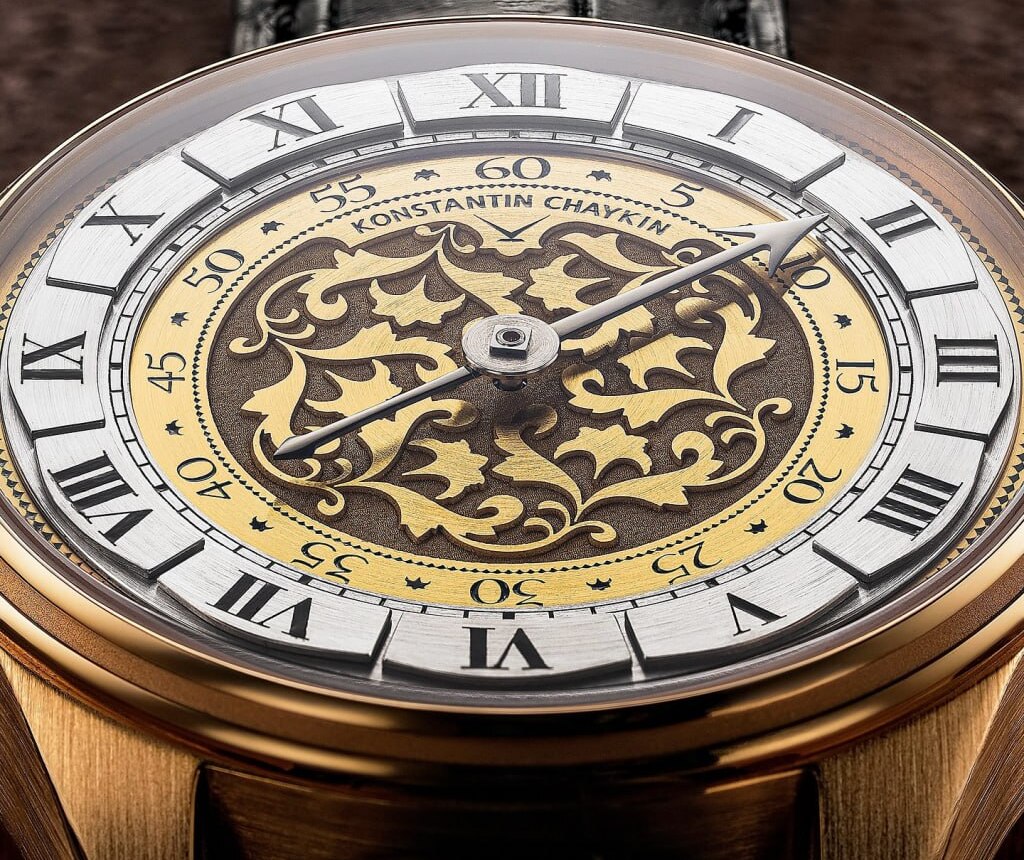
Designed and developed by the Russian master, the movement was created for a switchable single-hand display in which the central hand, at the push of the button at 2 o’clock, changes from indicating the current hour to indicating the minutes. Significantly, the path to the final version was not a straightforward one: the first working prototype of 2014 used a differential display system, but Chaykin was dissatisfied with how it performed, and by autumn he had prepared a new, revised version. That is why the value of Genius Temporis lies in more than the idea of a switchable hand alone. Behind it stands a sustained search for innovative solutions, one that transformed a striking concept into a work of horological art in its own right.