
Moscow Computus Clock
Moscow Computus Clock, the most complicated clock made in Russia
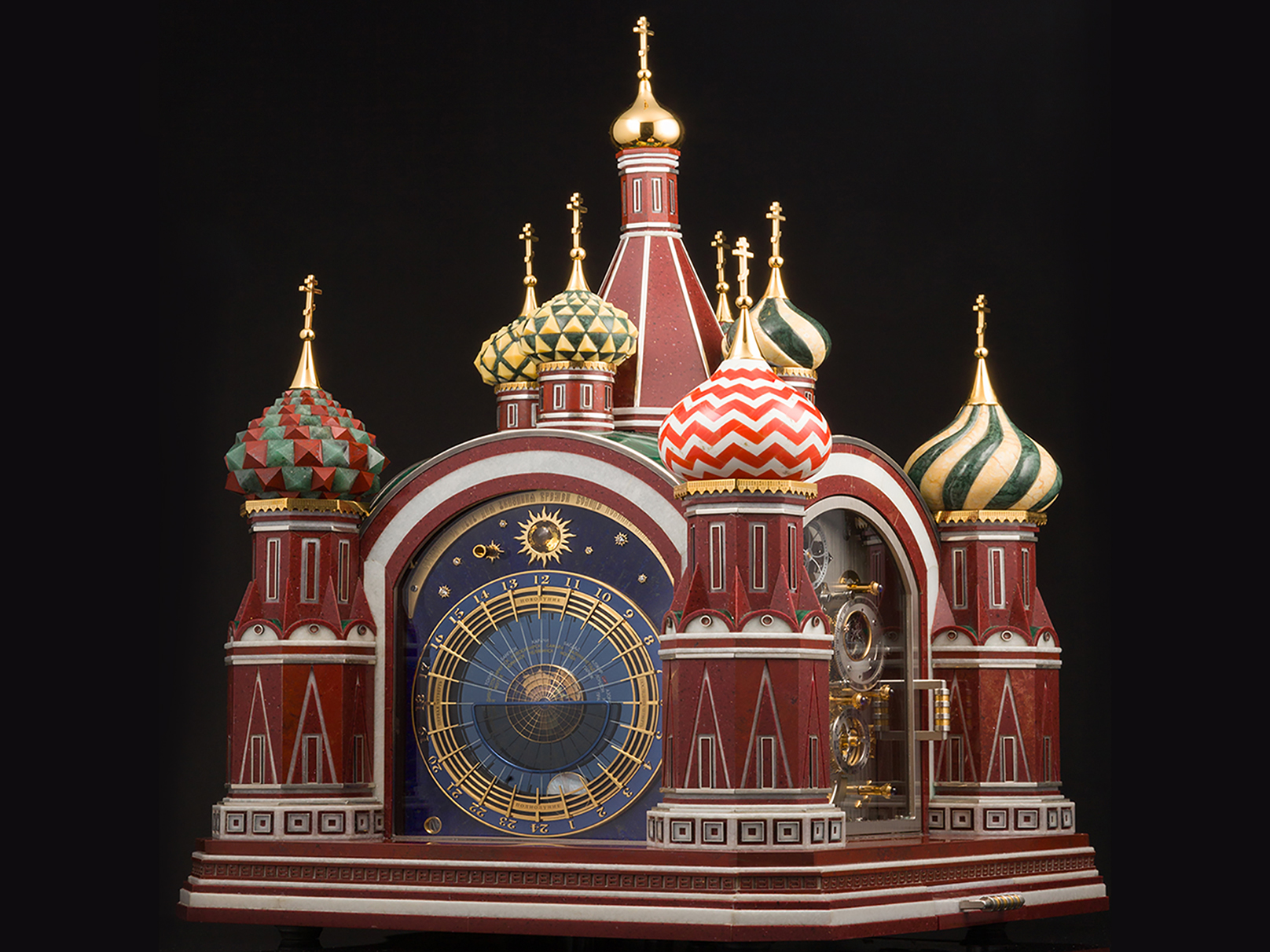
The name “Moscow Computus Clock” was not chosen by chance. Konstantin Chaykin created a symbolic clock that honors the old capital with its golden domes and white walls. The choice of architectural inspiration was also well-considered. Not the red-bricked, Bologna-inspired fortress walls of the official Kremlin, but the pearl of Russian architecture, St. Basil’s Cathedral. The super-complicated astronomical Moscow Computus clock, designed by Konstantin Chaykin, is the most complex clock ever built in Russia. The incredibly complicated movement consists of 2506 parts which set numerous hands in motion and require the arrangement of four dials.
The most important complication of the Moscow Computus clock is the Orthodox Easter date display, one of Konstantin Chaykin’s most complex inventions. In addition to this display, a further 26 complications and functions are implemented in the clock.
“In 2007, I made the first mechanical and automatic Computus module with an Orthodox Easter date display with one hand. The Moscow Computus clock is the result of experience, improvements and inventions that I have gathered over nine years, even though it took two years to make this clock. But can you imagine how much those two years of work cost the entire manufactory?” says Konstantin Chaykin.
Some complications and functions of the Moscow Computus сlock are not obvious until they are put into operation. One of these functions is Konstantin Chaykin’s intelligent power reserve indicator, which switches on during the last two days of the ten-day power reserve. This indicator takes the form of a black and white disk which rotates at a speed of approximately one revolution per second and is located in a small opening near the number “27” on the date dial. When the remaining energy of the winding barrel is only sufficient for one day’s operation of the movement, an acoustic notification is activated which warns of the critically low power reserve with a chime every two minutes.
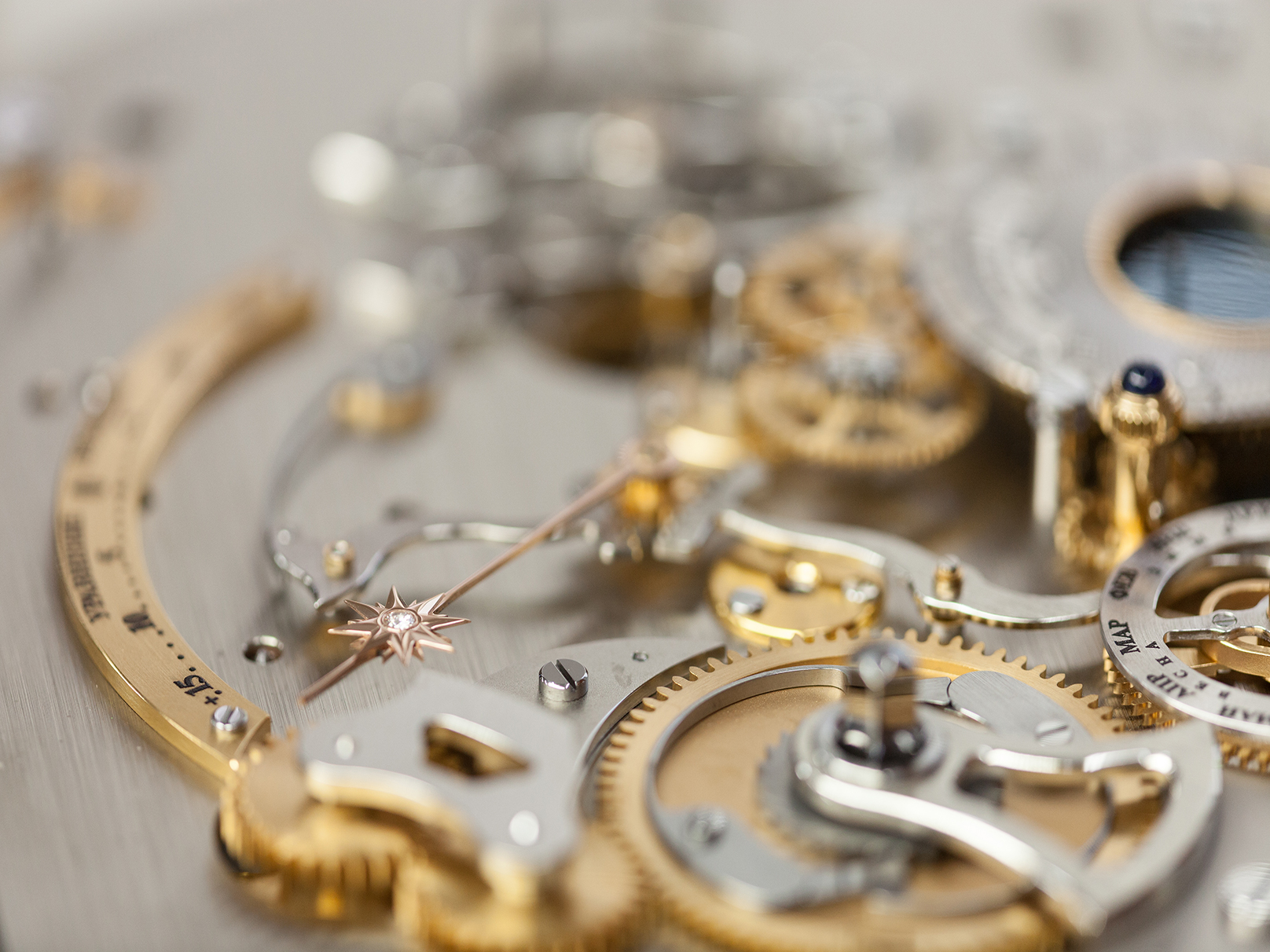
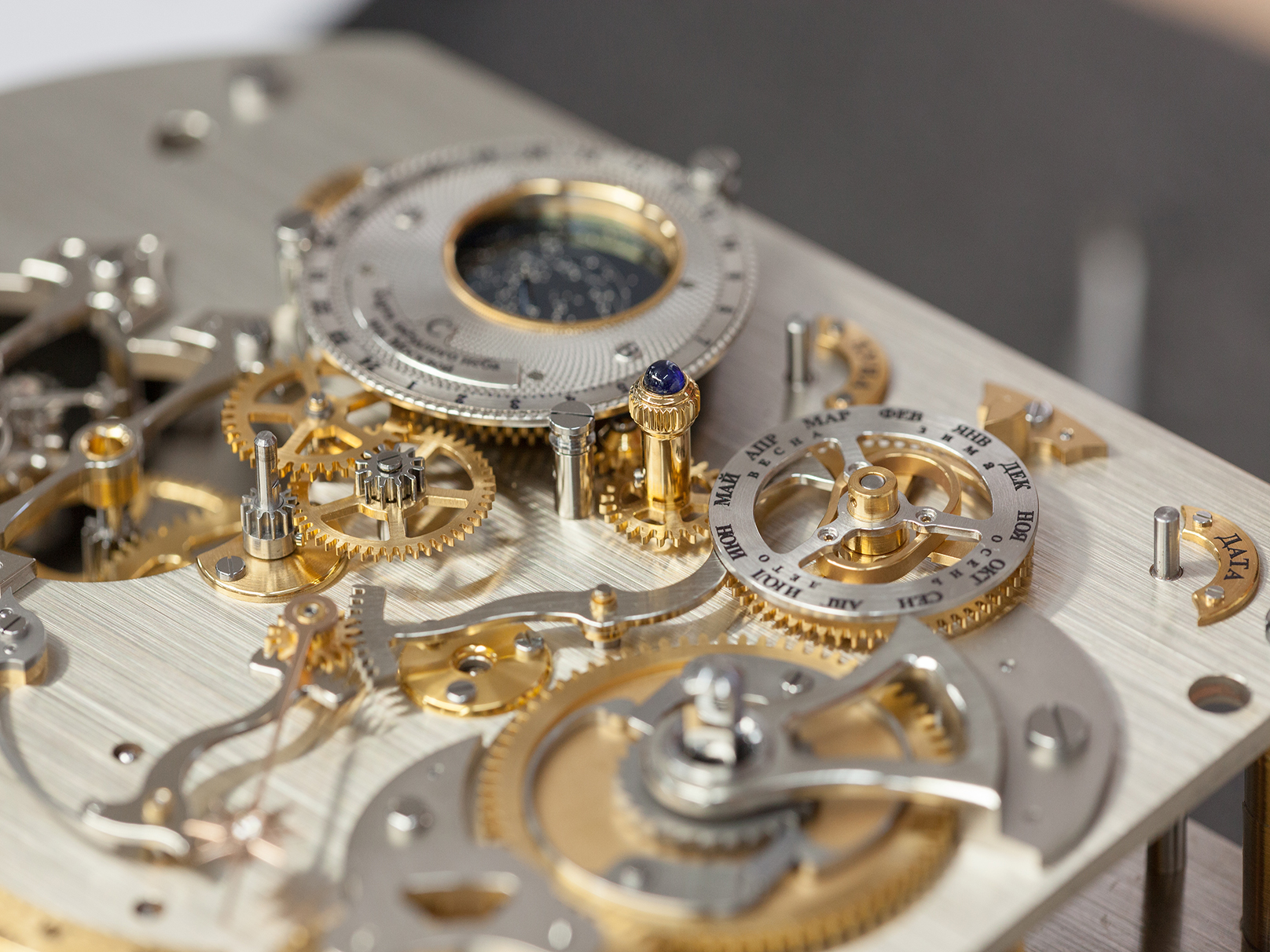
The movement of the super-complicated astronomical Moscow Computus clock is magnificent. The incredibly complex TCO.03-1 caliber consists of 2506 parts that set the displays on four dials on the four sides of the case in motion. In total, there are 27 complications built into the Moscow Computus clock (not including the hours, minutes and seconds of mean solar time, which are considered basic functions of the clock movement). With the successful assembly of the super-complicated movement of the Moscow Computus clock in 2016, Konstantin Chaykin surpassed his own achievement, which he had achieved just a year earlier with the super-complicated Northern Computus clock.
The Computus module is inactive throughout the year and wakes up ten minutes before the start of the new year. This is followed by an incredible movement that takes just a few of the 525,600 minutes that make up the year. The Easter hand leaves the date of the previous year’s Easter, moves far to the left and then begins its slow ascent to the Easter date of the new year. The mission is accomplished.
Analemma
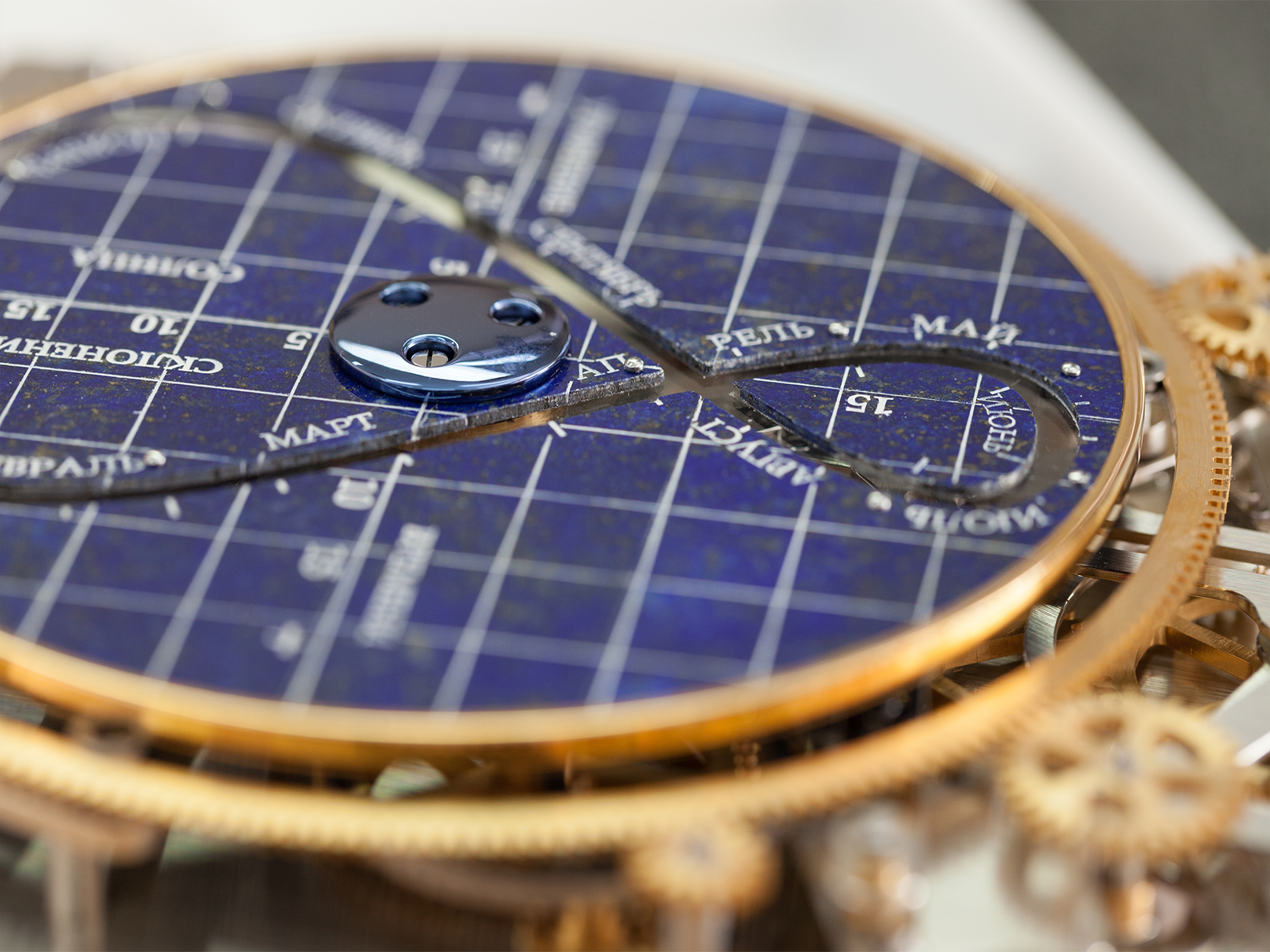
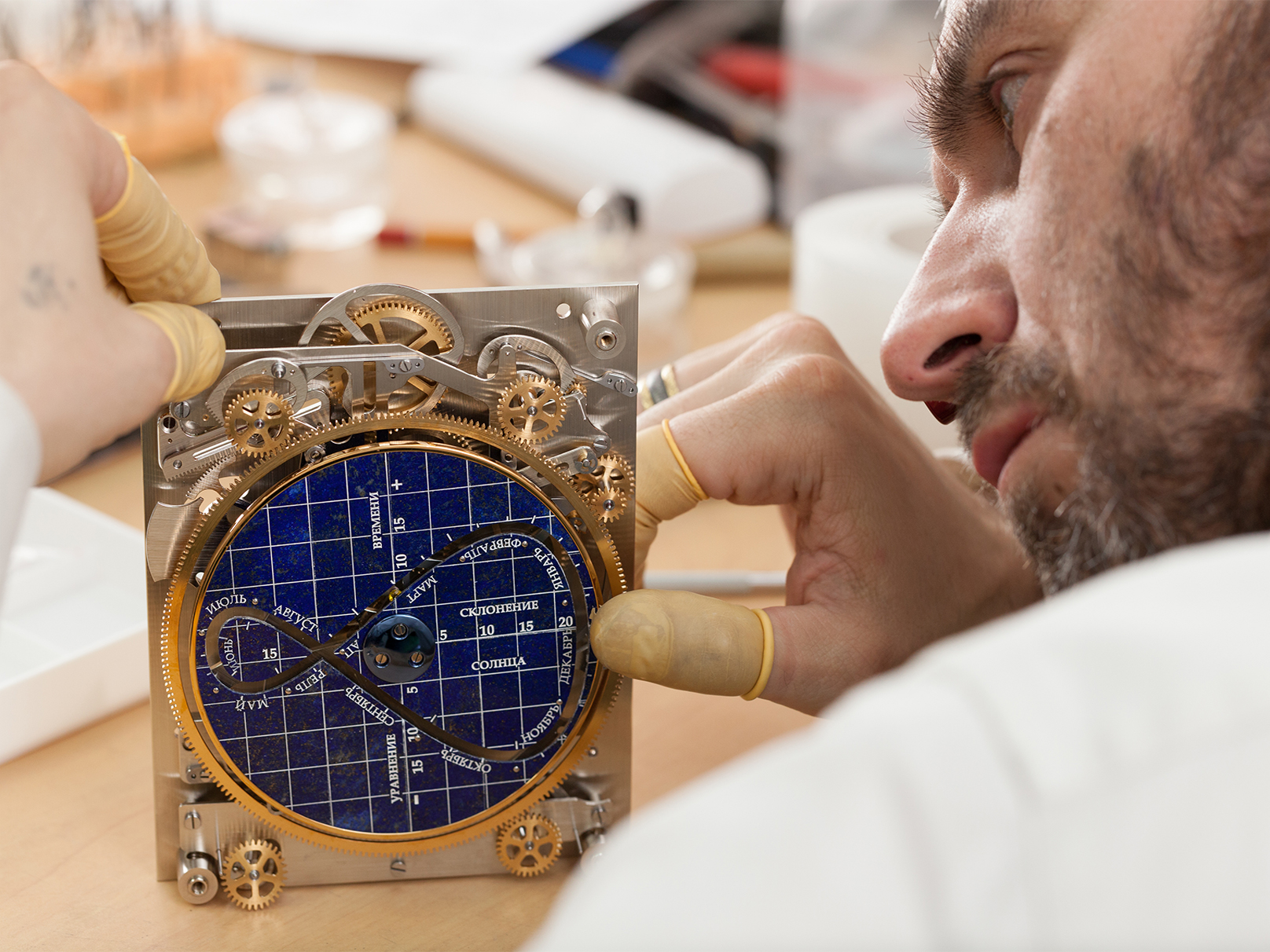
The analemma indicator is something very special among the clock's other functions. “I had been thinking about the analemma module for nine years,” explains Konstantin Chaykin. “The analemma itself resembles the symbol of infinity, and whatever I did, my thoughts kept returning to the idea of realizing this highly interesting astronomical phenomenon in a clock. For nine years I worked on different variants of such a module, and the last one, which is built into the Moscow Computus clock, is the best of its kind.”
The analemma dial looks amazing because it represents the positions of the sun in the firmament throughout the year if you mark it at the same time each year, for example at noon. This complication cannot be described as rare for one reason – it is unique. It was invented by Konstantin Chaykin and first used in the Moscow Computus clock.
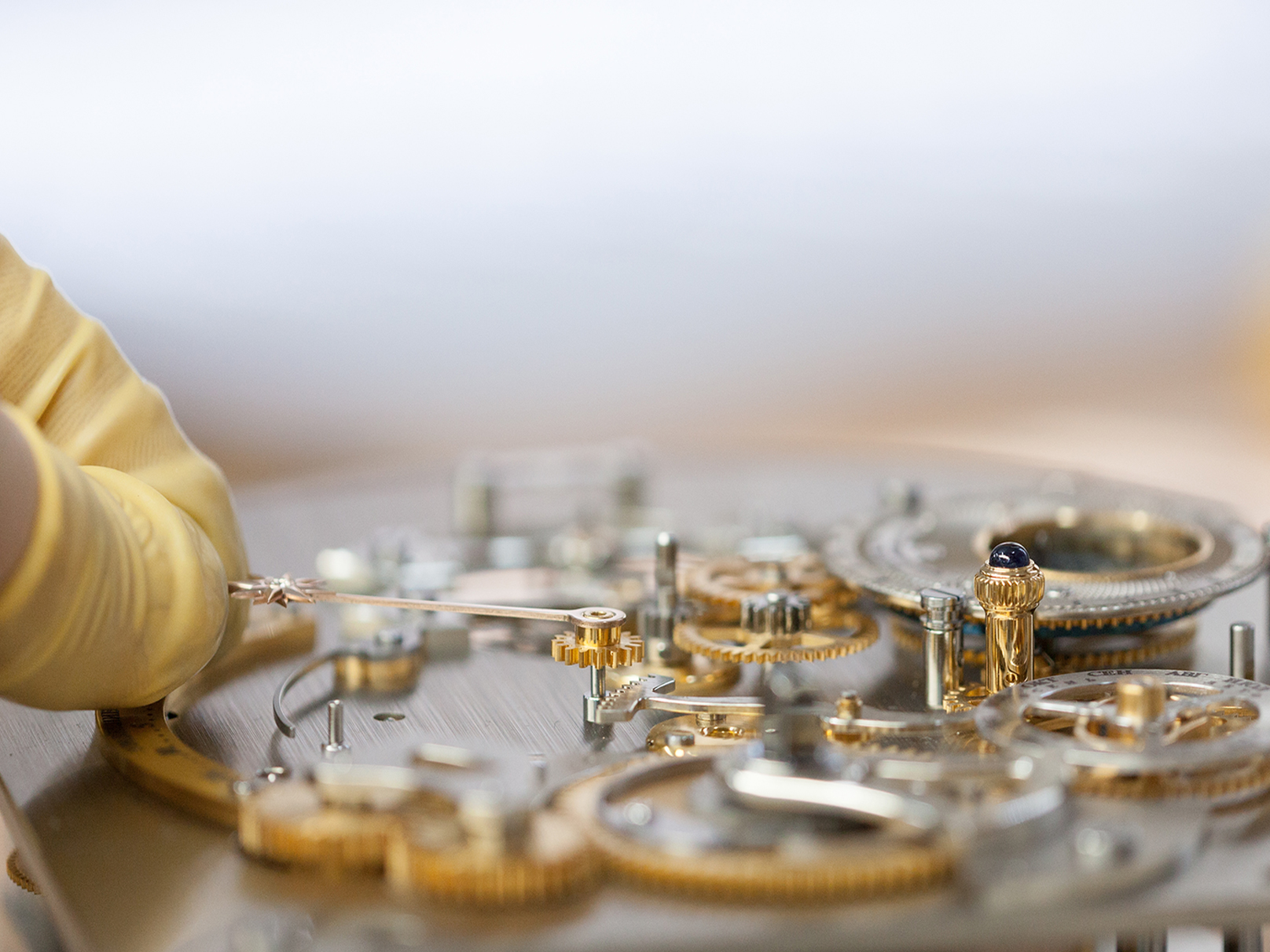
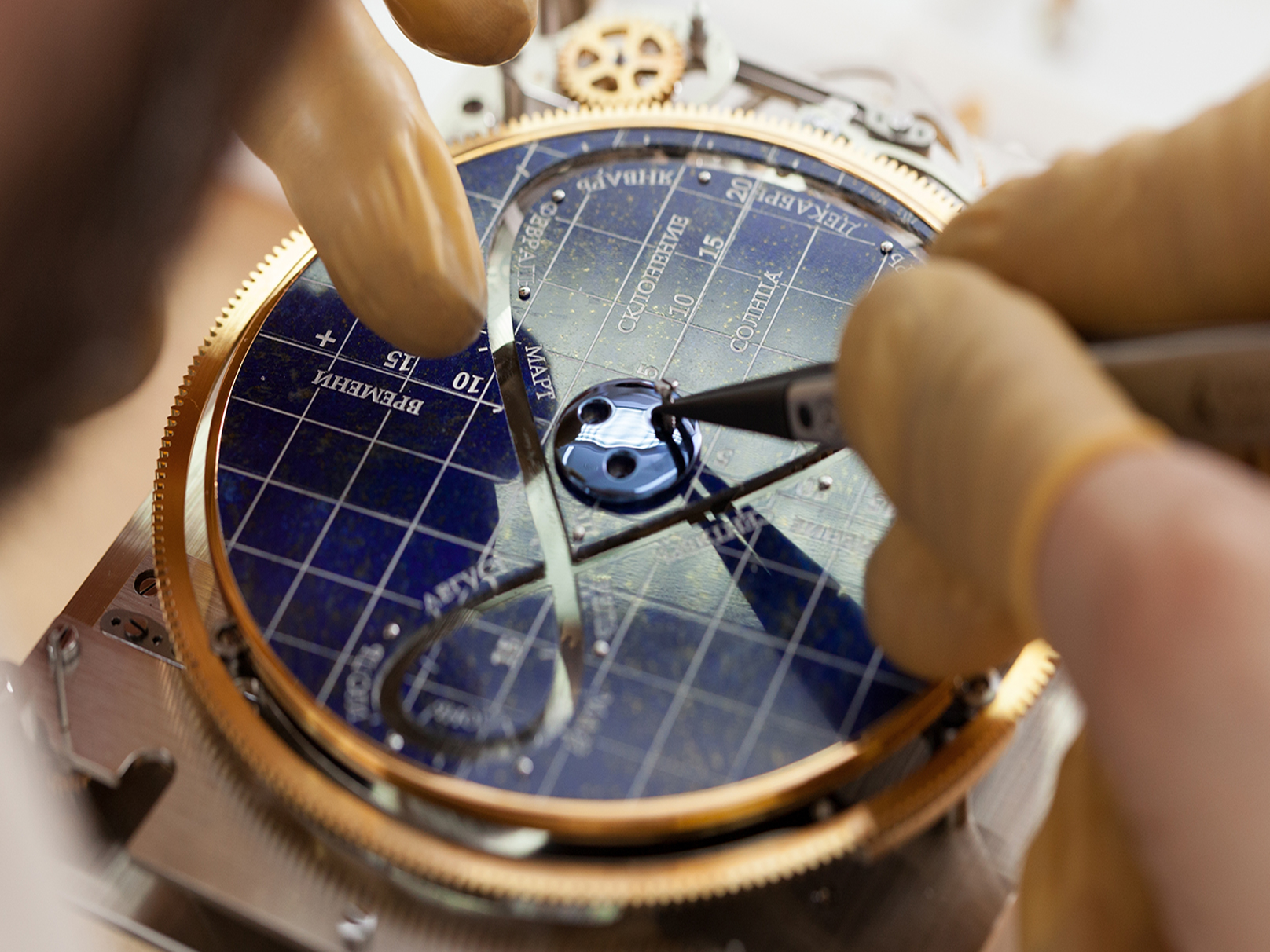
The analemma dial looks amazing, it represents the positions of the Sun in the firmament throughout the year, if you mark them each at the same moment in time, for example, at noon.
This complex device cannot be called rare for one reason - it is unique. It was invented by Konstantin Chaykin and first used in the Moscow Easter watch.
Architecture
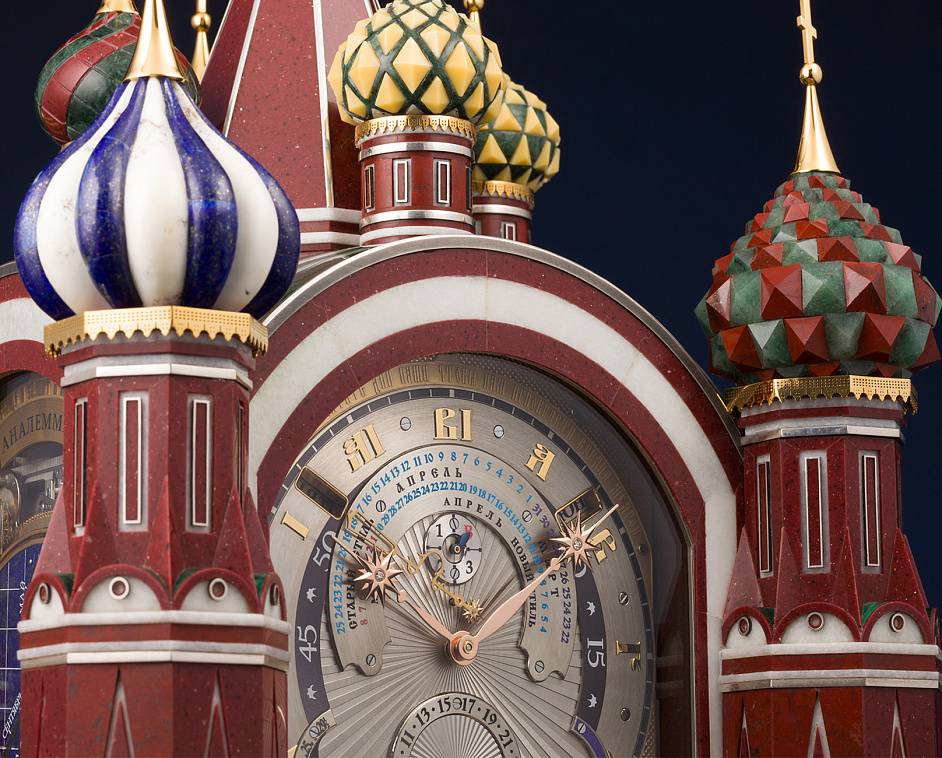
The decorative design of the Moscow Computus clock is in the spirit and style of St. Basil’s Cathedral – elegant, festive and with many architectural details and features of the cathedral. However, the Moscow Computus clock is not a model of St. Basil’s Cathedral, but rather a designer’s fantasy on this theme.

Movement
The case of the clock was extremely difficult to execute, as it consisted of more than 2,500 parts, mainly made of ornamental and semi-precious stones of various types, which were carefully matched to each other. The complex technique of inserting the stone parts required several steps of processing and adjustment, and each facet had to be provided with pre-calculated dimensions and polished to perfection, which is why the result can only be described as amazing.
Caliber: TCO.03-1, key wound, made by Konstantin Chaykin Manufacture
Power reserve: 10 days.

The complications of the Moscow Computus Clock
(Hours, minutes, and seconds of the mean time are considered to be the basic functions of the movement and are not seen as complications.)
- Computus—mechanical indication of Orthodox Easter date according to the Gregorian and Julian calendars.
- Perpetual calendar with automatic adjustment according to the months’ durations and the leap year cycle.
- Date indicator.
- Day of the week indicator.
- Month indicator.
- Four-digit year indicator (up to year 9999).
- Leap year cycle indicator.
- One-minute tourbillon.
- 10-day power reserve indicator.
- Indicator of the low level of power reserve (last 2 days).
- Acoustic indicator of the critically low level of power reserve (last day).
- Moon phase and age of Moon indicator (classic design).
- Planisphere with the Moscow starry sky map.
- Sidereal time indicator.
- Equation of time indicator.
- Seasons indicator.
- Analemma indicator.
- Solar declination indicator.
- Time of sunrise in Moscow.
- Time of sunset in Moscow.
- Day length in Moscow.
- Night length in Moscow.
- Tellurium, the indicator of the relative positions of the Sun, the Moon, and Earth.
- Orbital Moon phase indicator.
- 24-hour world time indicator.
- Indication of the change of day and night in the Northern Hemisphere.
- Mechanism of computus module direct drive from a ratchet wheel.
PHOTO GALLERY


