
Behind the Scenes of a Watch Manufacture
Horological art is not defined only by rare crafts brought together by a shared purpose, or by the handwork traditionally regarded as one of the hallmarks of a high-end manufacture. Behind every new movement, development or watch lies a vast body of work that is mostly invisible, yet essential to the final result.
This work is covered by the broad concept of R&D – research and development, including experimental design. It is what gives a manufacture its technical independence: the ability not simply to use ready-made solutions, but to develop its own movements, cases, assemblies and production processes.
At the Konstantin Chaykin Manufacture, R&D extends across the entire path from concept to finished result. It includes the development of new movements and modules, the search for suitable materials, the selection of machining parameters, the calculation of complex kinematics, the choice of surface-treatment methods and the testing of new assemblies. Through this work, components acquire the properties they need, retain stable geometry and behave predictably in operation.
R&D does not always start from a blank sheet. Any watchmaking production gradually builds up its own base of proven solutions: which materials are suitable for particular components, which machining parameters provide the required precision, how an alloy behaves after thermal exposure, and how reliably a given assembly performs once integrated into a complete movement.
From Concept to Technical Brief
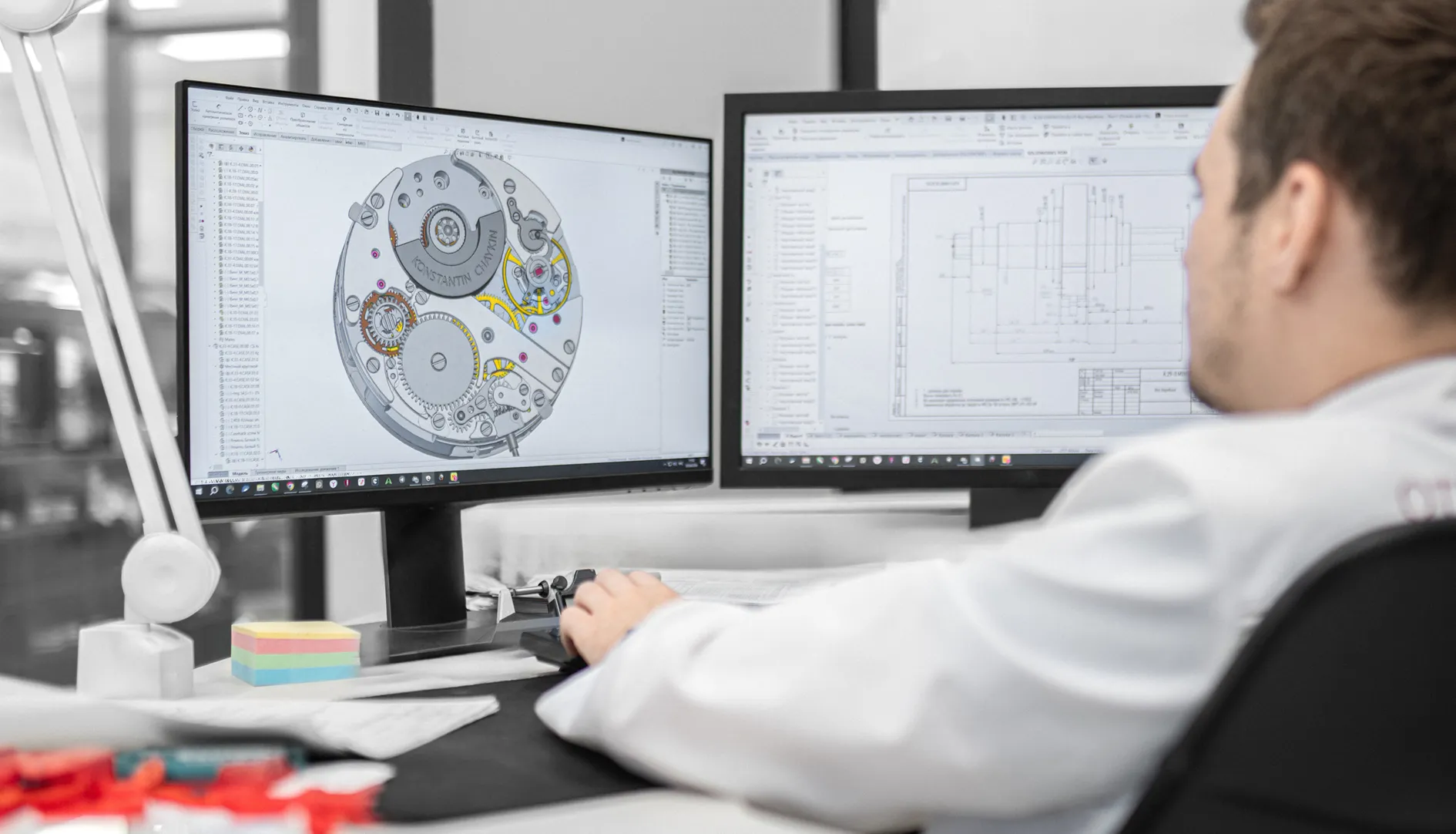
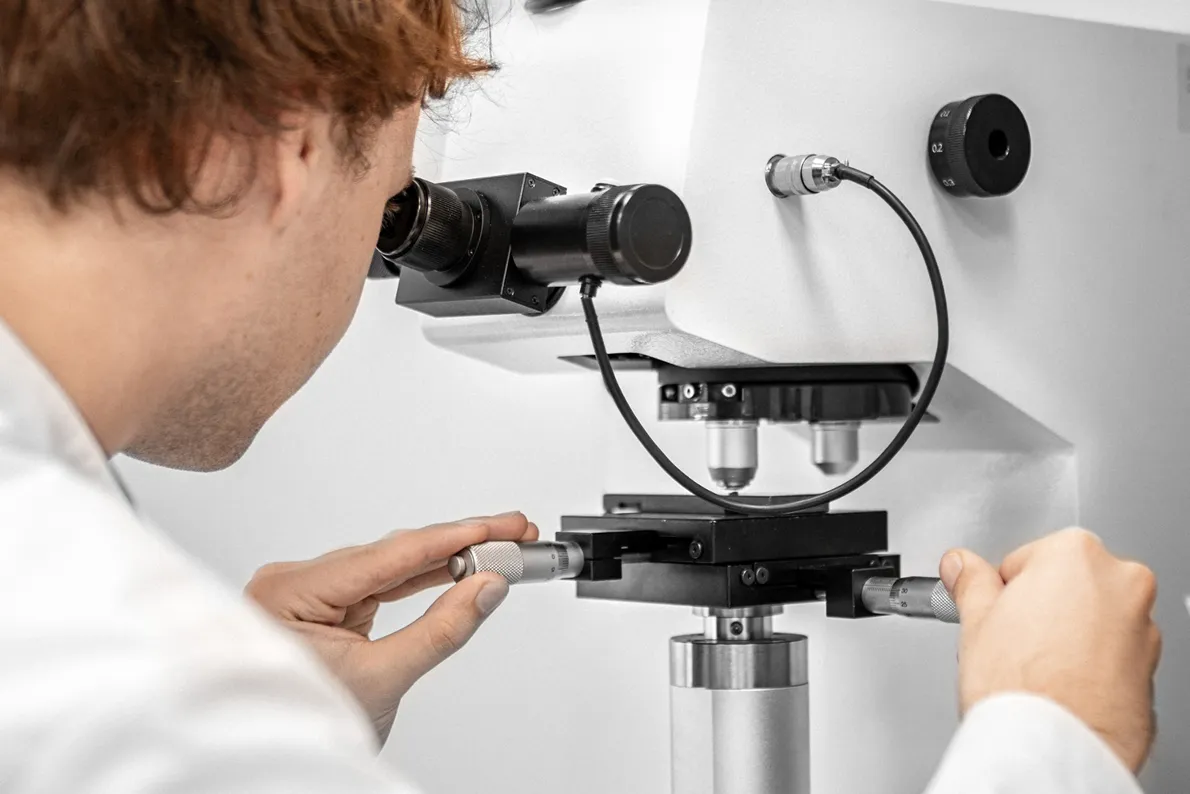
Within this chain, the designer is responsible for the structure of the movement: its layout, the interaction of its elements and the operating principle of each assembly. The technologist, in turn, builds the sequence of operations, writes the necessary programs, selects tools and fixtures, defines machining parameters and determines the methods of control.
Precision in Every Component
Once the overall architecture of the future movement has been defined, R&D turns to more specific but equally critical tasks: the search for new coatings and the testing of surface-treatment methods, the optimisation of gear meshing and the reduction of mass in moving components.
In a watch movement, a coating is never only about appearance. It can affect wear resistance, friction, corrosion resistance and dimensional stability. For this reason, R&D examines how a coating behaves on a specific material, how firmly it adheres, how thick it is and whether it interferes with critical fits and clearances. For components operating within extremely tight tolerances, even a few microns can matter.
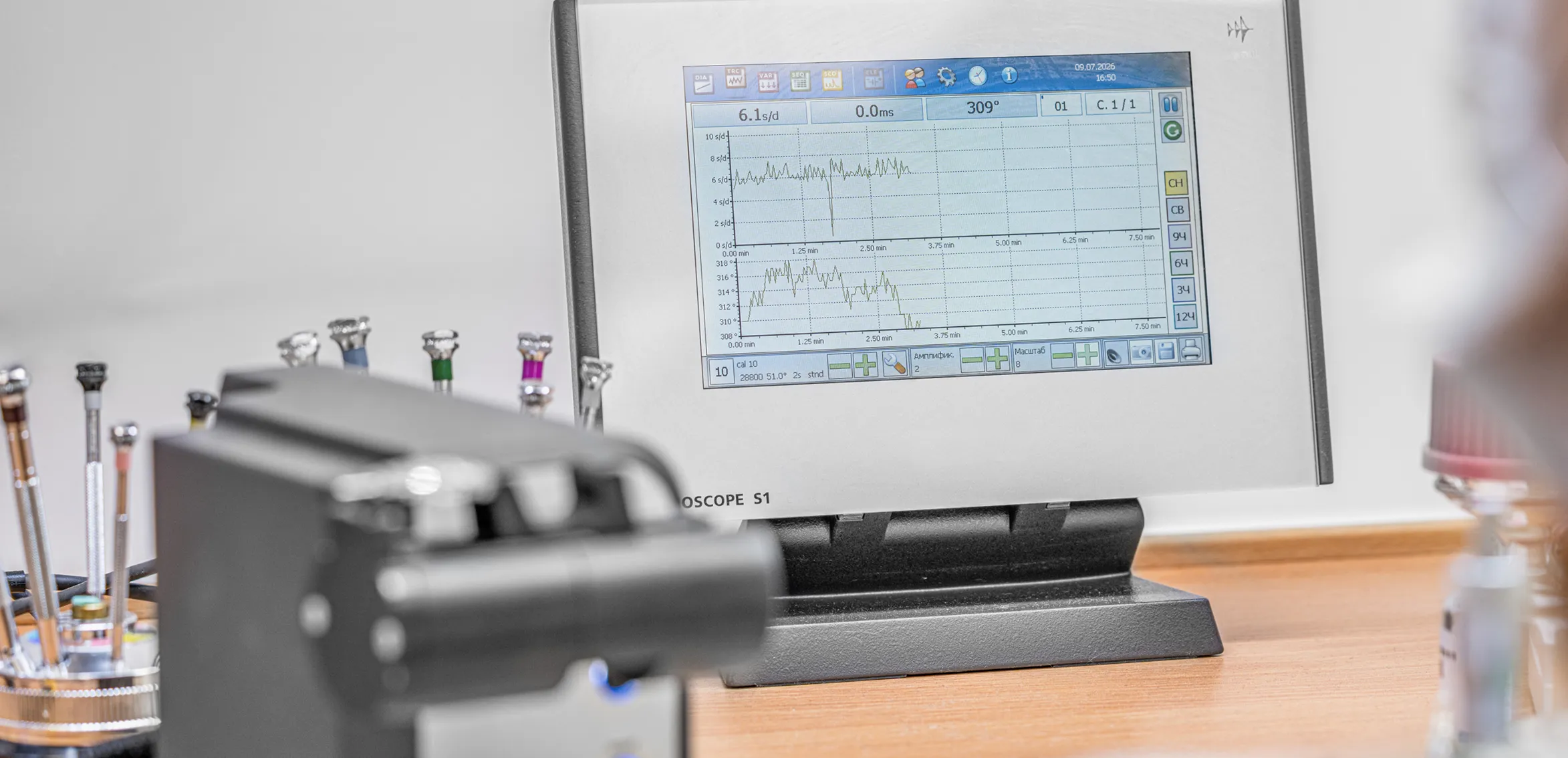
A separate group of tasks concerns gear meshing. What matters here is not only the dimensions of the wheels, but also the involute tooth profile, depth of engagement, working contact surfaces and clearances between wheels. These parameters determine energy transmission, friction losses, wear and the smoothness of operation. In complex movements, this is especially important: the longer the kinematic chain, the more noticeable any energy loss or geometric error becomes.
As the number of components increases, the dimensional tolerance stack-up also becomes more complex. Even if each individual part is made within specification, small deviations can accumulate in the assembled unit. The more components interact with one another, the stricter the requirements for manufacturing precision must be.
Mass reduction is another task with direct practical value. The lighter a moving element is, the less energy is required to set it in motion, and the lower the load on neighbouring components. Yet a component can only be lightened up to a certain point: it must remain rigid, reliable and suitable for repeatable production. Finding the optimum balance between form, mass and load therefore becomes an important part of the production process.
Mock-Ups: Verification Before Metal
Between the digital model and the first metal components lies another essential stage: mock-up development. A mock-up makes it possible to verify what is not always apparent on screen. A polymer model of the calibre, enlarged several times, helps assess dimensions, layout and the relative positions of bridges, levers, wheels, springs and other elements. Many errors become clear simply through handling a three-dimensional model.
Checking the assembly sequence is particularly important. In a watch movement, it is not enough to calculate the shape of a component. The team must also understand the order in which it will be installed, whether a screwdriver can reach a screw, whether access to a spring remains available, and whether an already assembled unit would have to be taken apart for a minor adjustment. For modular complications, this is critical: the module must fit onto the base calibre without interfering with components already in place.
Another important stage is the printing of kinematic mock-ups for individual assemblies. Plastic is not intended to withstand real loads inside a calibre, but at a larger scale it allows the team to check the interaction of components visually and physically: whether there is enough free space, for example, or whether one part may come into contact with another.
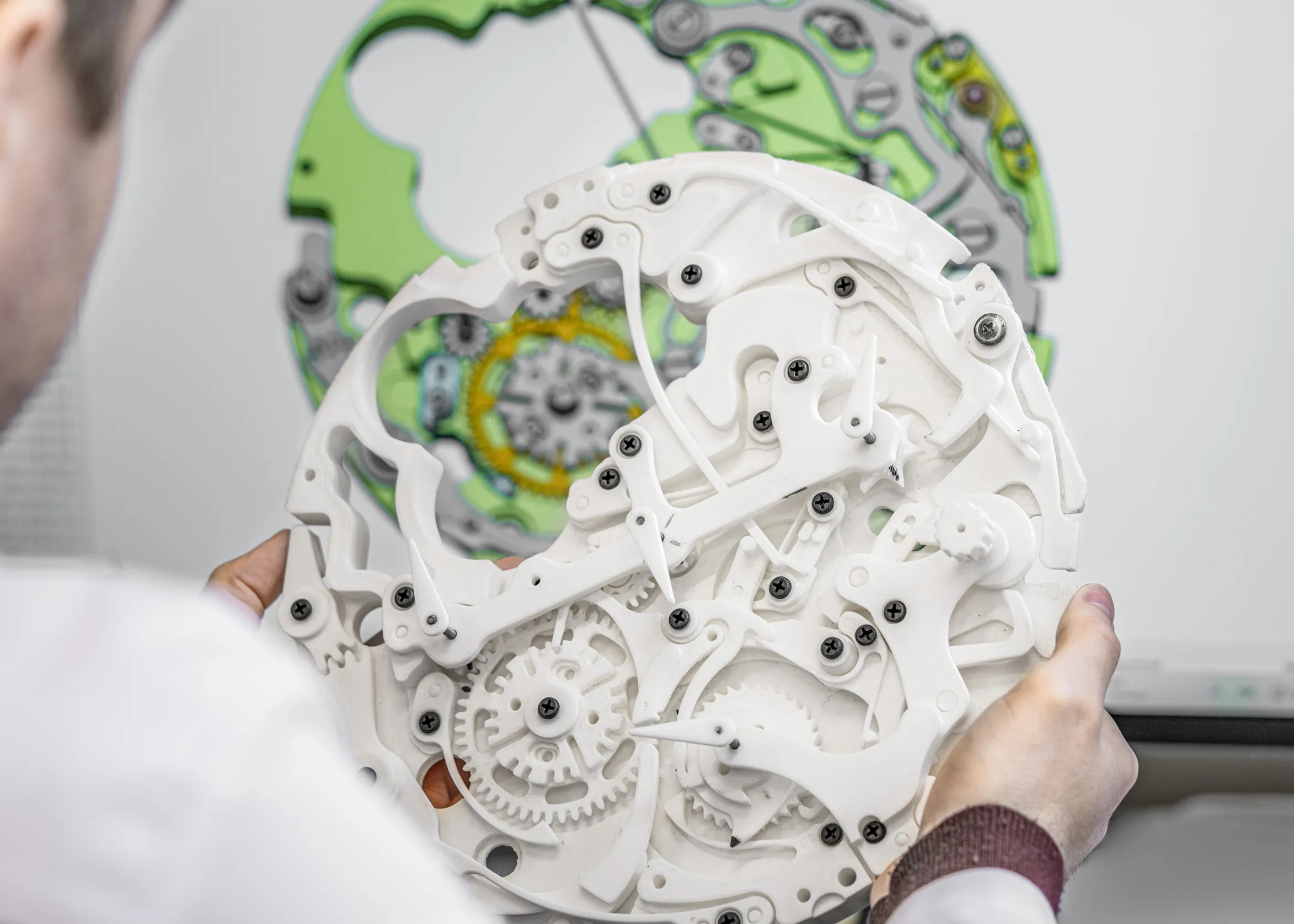
Mock-up work is faster and considerably less expensive than producing a metal prototype. At the same time, it helps prevent serious errors that might otherwise appear only during assembly. The process therefore usually moves in stages: digital model, enlarged polymer mock-up, design refinement, full-scale mock-up, and only then the production of the first metal components. After that, work with prototypes begins. The first prototype is rarely final. It is assembled, tested, disassembled, refined and tested again. Step by step, the idea becomes a movement that can be reproduced consistently.
The Space Program as the
Ultimate Form of Testing
A separate area of the manufacture’s R&D is connected with Konstantin Chaykin’s space program. This is one of the rare cases in the global watch industry in which mechanical watches are tested under the real conditions of orbital flight and outer space. For the Russian watch industry, this experience is especially significant: watches made by the manufacture have operated aboard the International Space Station and undergone hours-long testing outside the ISS while mounted on a spacesuit.
Such testing requires special preparation. By comparison, chronometric certification for mechanical watches usually tests a movement at three control temperatures: +8 °C, +23 °C and +38 °C. The conditions of outer space are incomparably harsher. During a multi-hour extravehicular activity, the watch and the spacesuit pass through alternating sunlit and shaded sections of orbit, where external surfaces can experience significant temperature fluctuations. Vacuum, weightlessness and increased operational loads add further challenges.
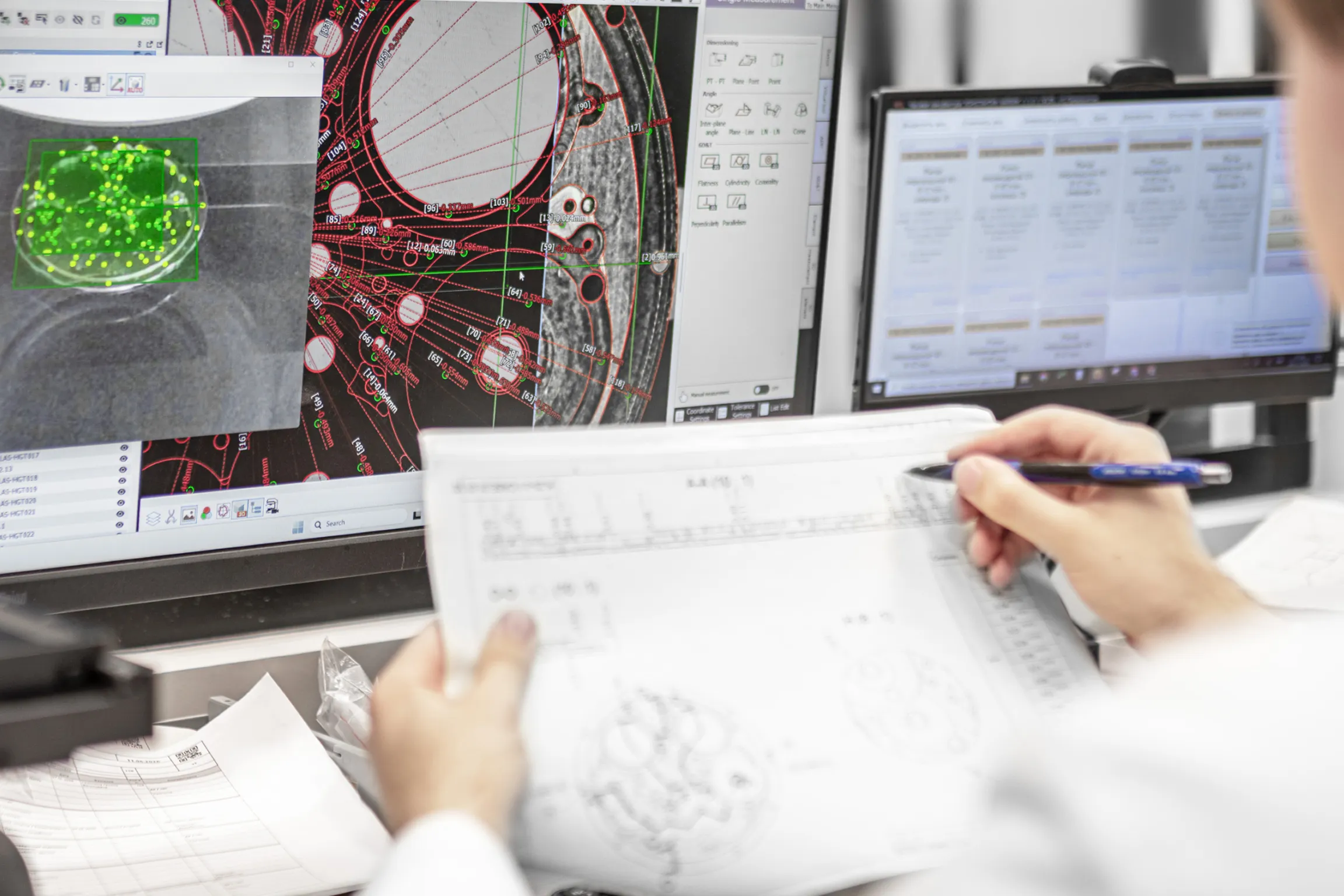
For this reason, the manufacture develops dedicated testing protocols: calculations, simulations, monitoring of case and movement behaviour, and tests under conditions approximating exposure to outer space. The resulting data makes it possible not merely to confirm the reliability of the construction, but to refine it on the basis of real operating experience in an environment that ordinary mechanical watches almost never encounter.
Patents as the Foundation
of Engineering Independence
R&D has particular significance for the Konstantin Chaykin Manufacture because many of its projects begin with the search for a solution that has not previously existed in watch mechanics. In such cases, the result is not only a new model, but also an innovative technical principle. This is why patents occupy an important place in the manufacture’s history. They do not simply confirm authorship of a particular idea; they record the solutions on which engineering independence is built.
Today, Konstantin Chaykin is the author of more than one hundred patents for inventions and dozens of utility model patents. Behind these numbers lies sustained work across different areas of watch mechanics – from calendar mechanisms and unconventional displays to ultra-thin constructions. One of the clearest examples of this approach is the work on the ultra-thin ThinKing watch and the subsequent Mystery of ThinKing.
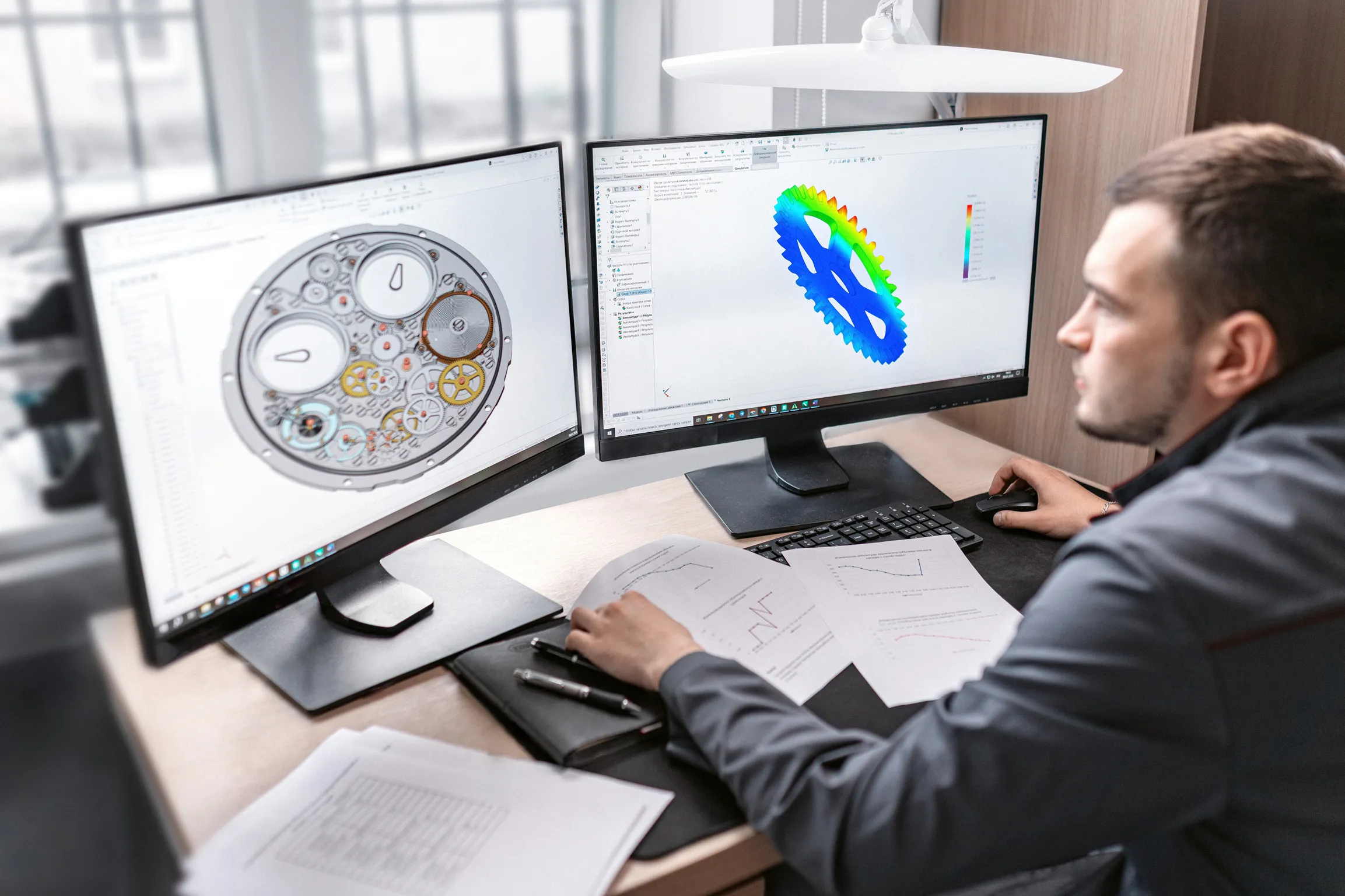
Externally, such watches are perceived first of all through their record-setting thinness and striking image. Behind that result, however, stands a whole series of engineering challenges. The team had to create an extremely thin movement architecture, preserve structural rigidity, develop the winding system, time display and protection, coordinate the interaction of components, and ensure that the watch could be used in everyday conditions.
In the Mystery of ThinKing, this work took on a new form. The model preserved the record thickness of 1.65 mm while adding a mystery time display with transparent hour and minute indicators. This is no longer simply a development of the prototype, but an example of how one direction of R&D gives rise to the next: first, the challenge of extreme thinness is solved; then, on the same engineering foundation, new versions of the watch emerge.